
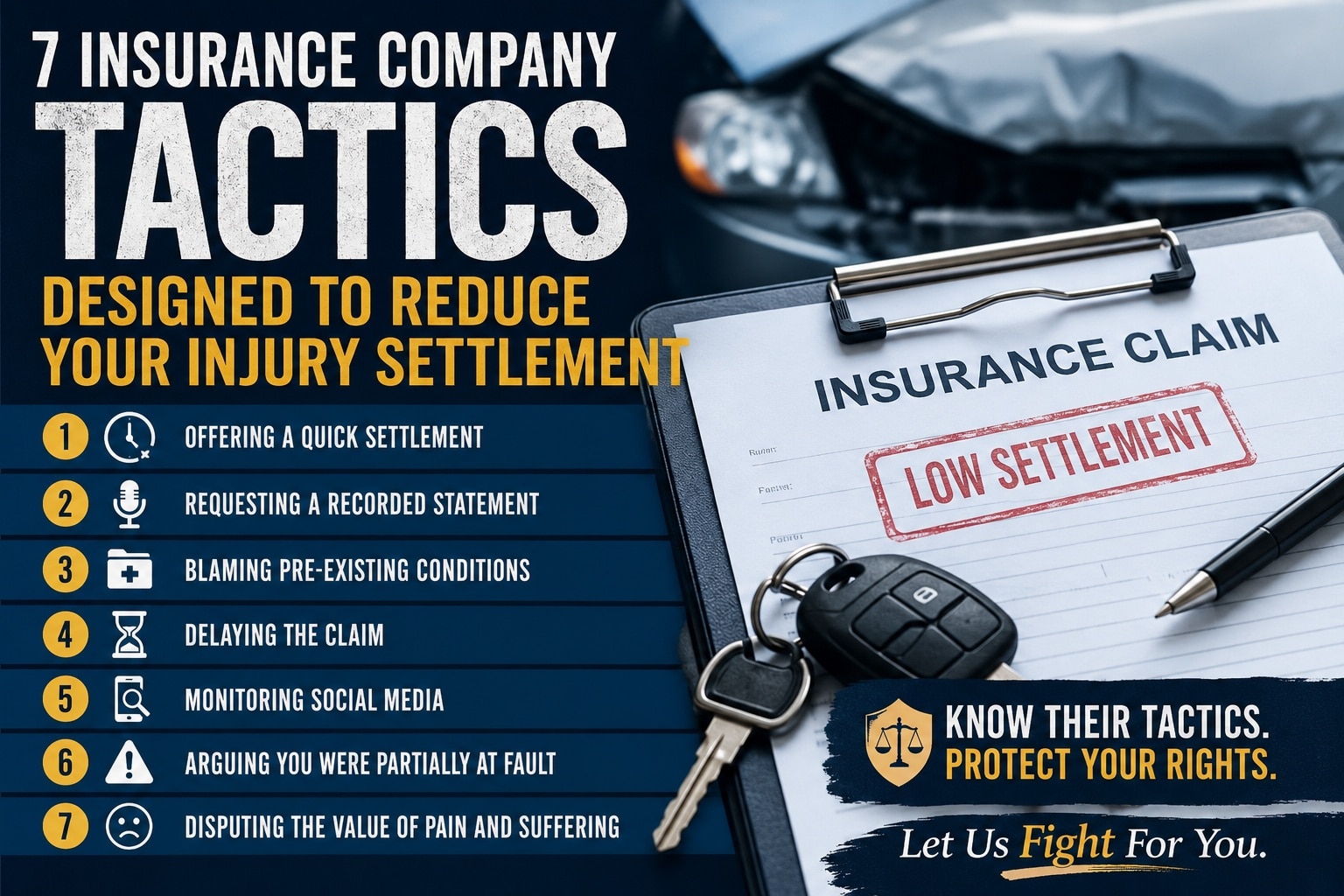
After a serious car accident, most people assume the insurance company will fairly evaluate their claim and pay what it is worth. Unfortunately, insurance companies are businesses. Their goal is to collect premiums and minimize payouts whenever possible.
That does not mean every adjuster is dishonest. However, insurance companies employ numerous clever tactics, designed to reduce the amount they pay on injury claims.
Understanding these tactics can help protect your rights and maximize your recovery. Do not fall for their tricks. Insurance companies have a team of lawyers; you should too.
Tactic #1: Offering a Quick Settlement
One of the most common tactics is making a settlement offer shortly after an accident, sometimes before you even know the full extent of your injuries.

A quick settlement can be tempting. Medical bills are mounting. You may be missing work. Stress builds quickly. The offer may seem like a welcome source of relief.
The problem is that many injuries take weeks or months to fully develop. Neck injuries, back injuries, traumatic brain injuries, and chronic pain conditions often worsen over time.
Once you sign a settlement agreement, you generally cannot go back and ask for additional compensation later. They know that. That’s why they apply pressure early and often.
Before accepting any settlement offer, it is important to understand the full nature of your injuries and future medical needs.
Lesson: Settling early will often cost you later!
Tactic #2: Requesting a Recorded Statement
Shortly after an accident, an adjuster may call and ask for a recorded statement.
They may tell you that it is simply part of the claims process.
What many people do not realize is that the insurance company is looking for statements it can later use against them.
Common examples include:
- Speculating about how the accident occurred
- Admitting partial fault
- Minimizing injuries
- Describing symptoms inaccurately
- Making inconsistent statements
Even innocent comments can be taken out of context.
Before providing a recorded statement (or even talking) to the at-fault driver’s insurance company, consider speaking with an attorney about your rights.
Lesson: Once on tape, it may be too late!
Tactic #3: Blaming Pre-Existing Conditions
This one is one of their favorites. Insurance companies frequently argue that your pain or limitations existed before the accident.
For example, if you have a history of:
- Back or Neck pain
- Arthritis
- Prior surgeries
- Previous injuries
The insurance company may claim that the accident did not cause your current condition.
However, Oregon law generally allows injured individuals to recover compensation when an accident aggravates or worsens a pre-existing condition. And while you might have had prior issues with your health in the past, it doesn’t explain your pain/disability after the crash.
The fact that you had prior medical issues does not automatically prevent recovery.
Lesson: Old pain doesn’t outweigh new injuries.
Tactic #4: Delaying the Claim
Sometimes insurance companies delay claims in hopes that injured people become frustrated or financially desperate.
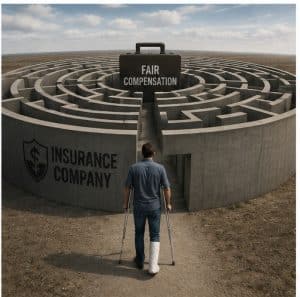
These delays can include:
- Repeated requests for records
- Slow or no responses to communications
- Frequent changes in adjusters
- Unnecessary investigations
- Requests for duplicate information
The longer a claim remains unresolved, the more pressure many accident victims feel to accept a lower settlement. It also allows the insurance company to keep your money and collect interest.
Keeping organized records and obtaining legal assistance, when necessary, can help prevent needless delays.
Lesson: Delay equals more money for the insurance company.
Tactic #5: Monitoring Social Media
Many people are surprised to learn that insurance companies may review publicly available social media content.
Photos, videos, comments, and posts can all be used to challenge injury claims.
For example, an insurer may argue that:
- Vacation photos show you are not seriously injured
- Exercise activities contradict your medical complaints
- Comments about feeling well undermine your claim
A single photograph often fails to tell the whole story. Just like the recorded statement, taken out of context, pictures can hurt your claim. Someone may appear to be enjoying a family gathering while still experiencing significant pain and limitations.
Following an accident, it is generally wise to be cautious about what you post online.
Lesson: Social posting after crash may cost you cash.
Tactic #6: Arguing You Were Partially at Fault
Oregon follows a comparative negligence system.
Insurance companies know that if they can convince a jury that you were partially responsible for the accident, your compensation will be reduced proportionately.
Common allegations include:
- Driving too fast
- Failing to pay attention
- Not using a turn signal
- Following too closely
- Failing to avoid the collision
Even when liability appears clear, insurance companies may attempt to shift some responsibility to the injured person. Gathering evidence early, including photographs, witness statements, and police reports, can be critical in countering these arguments.
Lesson: Insurance companies are quick to point the finger at you.
Tactic #7: Disputing the Value of Pain and Suffering
Medical bills are only one component of an injury claim.
Many accident victims experience:
- Physical pain
- Emotional distress
- Anxiety
- Loss of enjoyment of life
- Permanent limitations
Insurance companies often attempt to minimize these damages because they are more difficult to quantify than medical expenses. Properly documenting how injuries affect your daily life can help demonstrate the true impact of the accident.
Keeping a pain diary or your calendar of medical appointments is very useful for future use. As well as a diary listing your missed opportunities such as attending a wedding, going on a planned trip, or painting your house.
Lesson: Your pain has a compensable value.
Protecting Yourself After an Oregon Car Accident
You do not need to assume that every insurance company is acting in bad faith. However, you should understand that the insurer’s interests are not necessarily aligned with yours.
If you have been injured in a car accident, it is important to:
- Seek prompt medical treatment
- Follow your doctor’s recommendations
- Document your injuries and recovery
- Be cautious when speaking with insurance adjusters
- Consider obtaining legal advice before accepting a settlement
The decisions you make during the first few weeks after an accident can significantly affect the value of your claim. Let Us Fight For You.
At Shlesinger & deVilleneuve Attorneys, P.C., we have spent decades helping thousands of injured Oregonians stand up to insurance companies.
If you have questions about your rights after an accident, contact us for a free consultation. We can evaluate your claim, explain your options, and help level the playing field against the insurance company.